Makhana grades explained: what 4 suta to 7 suta really means
By Veltrix Exports · 3 min read
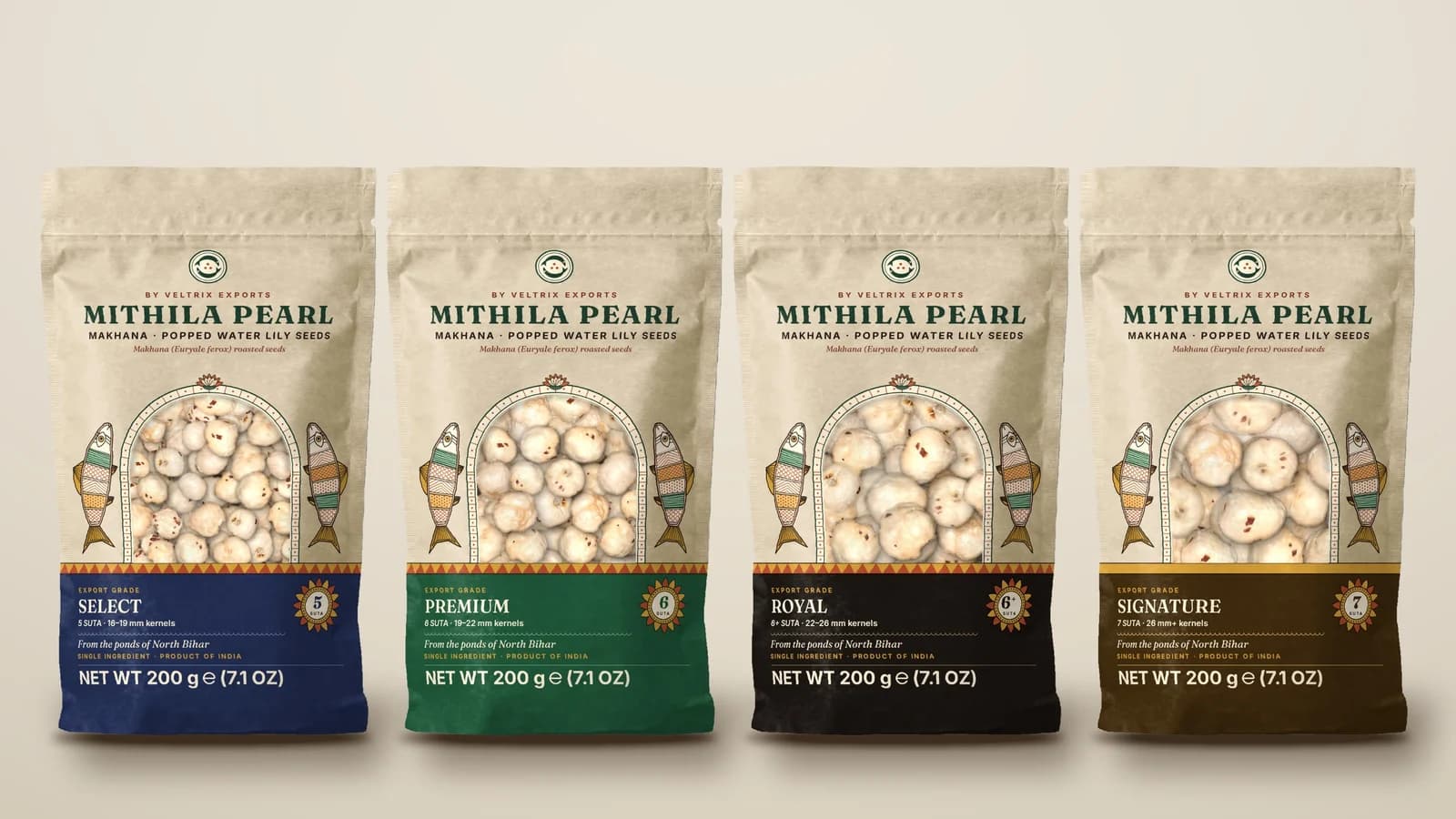
If you buy makhana (fox nuts) from India for the first time, the first word you will hear from a supplier is suta. It decides most of the price, and it is where most first-time buyers get caught out.
What is a suta?
Makhana is the popped seed of Euryale ferox, a water lily grown in the ponds of north Bihar. After harvest, the seeds are dried, roasted and popped, usually by hand. The popped kernels are then graded by diameter.
Suta is the trade's traditional size scale for popped kernels: the higher the suta, the bigger the kernel. Our Mithila Pearl grades carry a tier name with the suta alongside:
| Grade | Approximate diameter | Typical use |
|---|---|---|
| SIGNATURE (7 suta) | 26 mm and above | Our top grade, for top-end gifting; price on request |
| ROYAL (6+ suta) | 22–26 mm | Gifting and premium shelves |
| PREMIUM (6 suta) | 19–22 mm | Premium retail; what most UK and EU buyers ask for |
| SELECT (5 suta) | 16–19 mm | General retail; common for the Gulf and Canada |
| 4 suta (bulk) | 12–16 mm | Food service, cooking, price-led wholesale |
| 3 suta and below | under 12 mm | Flour, powder, budget domestic packs |
Why bigger is more expensive
A bigger kernel is a better pop: it is whiter, lighter and crunchier, because it is mostly air. Large, well-popped kernels are scarcer, so those grades cost much more at source. In 2025-26, Bihar wholesale prices for 6 suta were roughly 1.4 to 2 times those for 4 suta.
How to check a grade yourself
You do not need a lab to check size. Two simple tests catch most problems:
- The 20-kernel test. Take 20 kernels at random from the bag, not from the top, and measure each diameter. The average should sit inside the grade's range.
- The weight-per-volume test. Fill a container to a fixed mark without pressing, and weigh it. Better-popped makhana is lighter for the same volume. Compare samples from different suppliers with the same container.
A lab test adds what your eyes cannot see: moisture (the EU rule for makhana is below 5.0%), aflatoxin, and microbiology.
The most common problem: grade mismatch
The classic complaint in this trade is a 6 suta sample followed by a 4 or 5 suta delivery. The price gap between those grades is large, so it matters. Three habits protect you:
- Ask for the grade to be written on the proforma and commercial invoice, not just said in an email.
- Ask for a sample from the actual lot, with its lab certificate, not a showroom sample.
- Ask your supplier to keep a retention sample from your lot, so a claim can be checked fairly.
Which grade should you buy?
For a retail pack in the UK, EU or Australia, start with PREMIUM (6 suta). For a flavoured snack, SELECT (5 suta) usually gives the best value, because seasoning hides small size differences (our flavoured makhana uses a SELECT (5 suta) base). For gifting and premium shelves, look at ROYAL (6+ suta), or SIGNATURE (7 suta), our top grade, priced on request. For food service and cooking, 4 suta is enough. For makhana flour, smaller grades are fine.
If you are not sure, ask for a comparison set: three labelled bags of SELECT, PREMIUM and ROYAL with the measured sizes written on each. Seeing them side by side answers the question in a minute.